
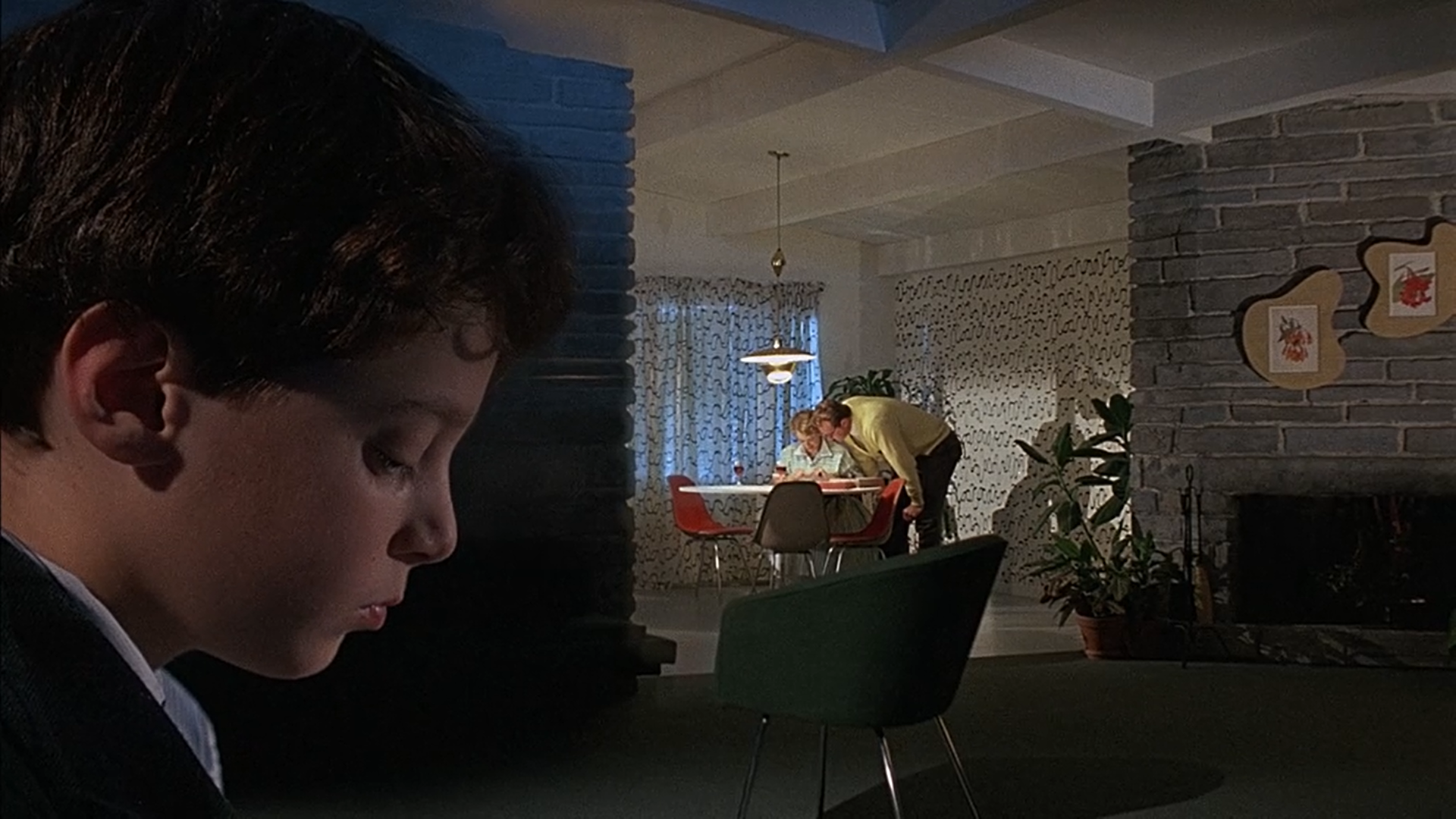
PARENTS is a 1989 black comedy starring Randy Quaid, Mary Beth Hurt as stereotypical 1950’s American parents and Bryan Madorsky as a young boy named Michael. They move to a new town and Michael, a shy and over imaginative kid, begins to suspect his parents are…Not Normal. One night he awakes to get a glass of water and sees his parents doing something in the living room. Are they having sex? Or are they savagely biting each other? Is everything the result of anxiety from a new move, coupled with nightmares mixing up what is real and what is not? Michael’s parents tell him everything is fine. Go back to bed. We are your parents, we know what’s best.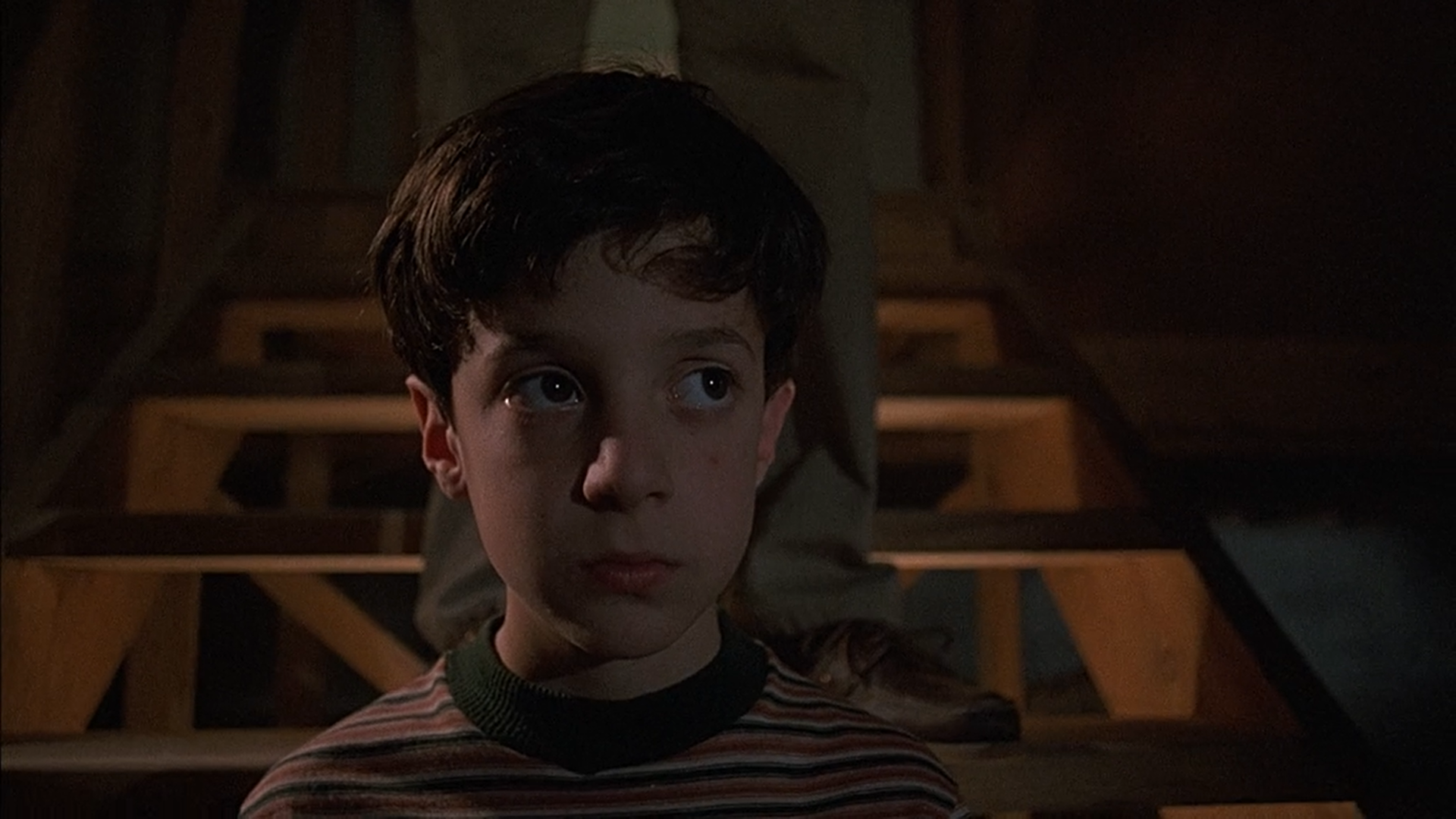
Michael soon becomes suspicious that his parents are not serving traditional meat at the dinner table. What are we having for dinner? He asks them. “Leftovers,” his mother says. From where? “From the refrigerator!” Mom and Dad share a knowing laugh. This “well duh” moment reminds me how frustrating it can be to talk to adults as a kid. They don’t treat you quite like a person.
Parents lie to their kids all the time. Whether it is “white lies” (My nephews are told steak is “beef jerky” because they will not eat it otherwise) or…darker things. Family secrets. Things that change who you are. “You were a kid, you wouldn’t remember that.” Children have much better memories than we give them credit for. Things that have no meaning to us as adults or seem like a blip in time rather than what a huge experience it is when you’re five, six, years old. This goes for mundane things and unfortunately also in cases of abuse. You begin to believe what you are experiencing is normal.
When I was a teen, upon the recommendation of my then therapist, I wrote a letter to my mother detailing things I had gone through and how they had hurt me. I find it difficult to use the word “abuse” even though I know that is exactly what it was. I presented the letter to her, and sat across from her, terrified. She read it so quickly I feel like she couldn’t have absorbed what I wrote. She told me, “these things never happened. I didn’t do this.” This devastated me. It should come as no surprise I’ve never been able to open up to her again.
He goes to his school’s guidance counselor Millie and tells her he thinks his parents are eating people. She tells him he is imagining things. Someone he should be able to trust refuses to believe him. If she doesn’t believe him, who will? Many abuse survivors don’t speak up for this exact reason, and many who do speak up are punished. Later, Michael is forcibly seated at the dinner table and told, don’t worry, you’ll get used to (eating human flesh), just like your mother did. You could take this to be the mother is being abused too, and is now forced to go along with it. It has become her normal, and now it will for Michael.
Michael: I don’t love you anymore.
Mom: Yes you do.
Dad: (as he slowly unties Michael) I’m untying, and when you’re free, you can sit down with us and eat, or could run outside and shout your little secret to the world. And you know what they’ll do, Michael? Hmm? They’ll come here and they’ll burn us. Is that what you want, you want to see them burn your parents?“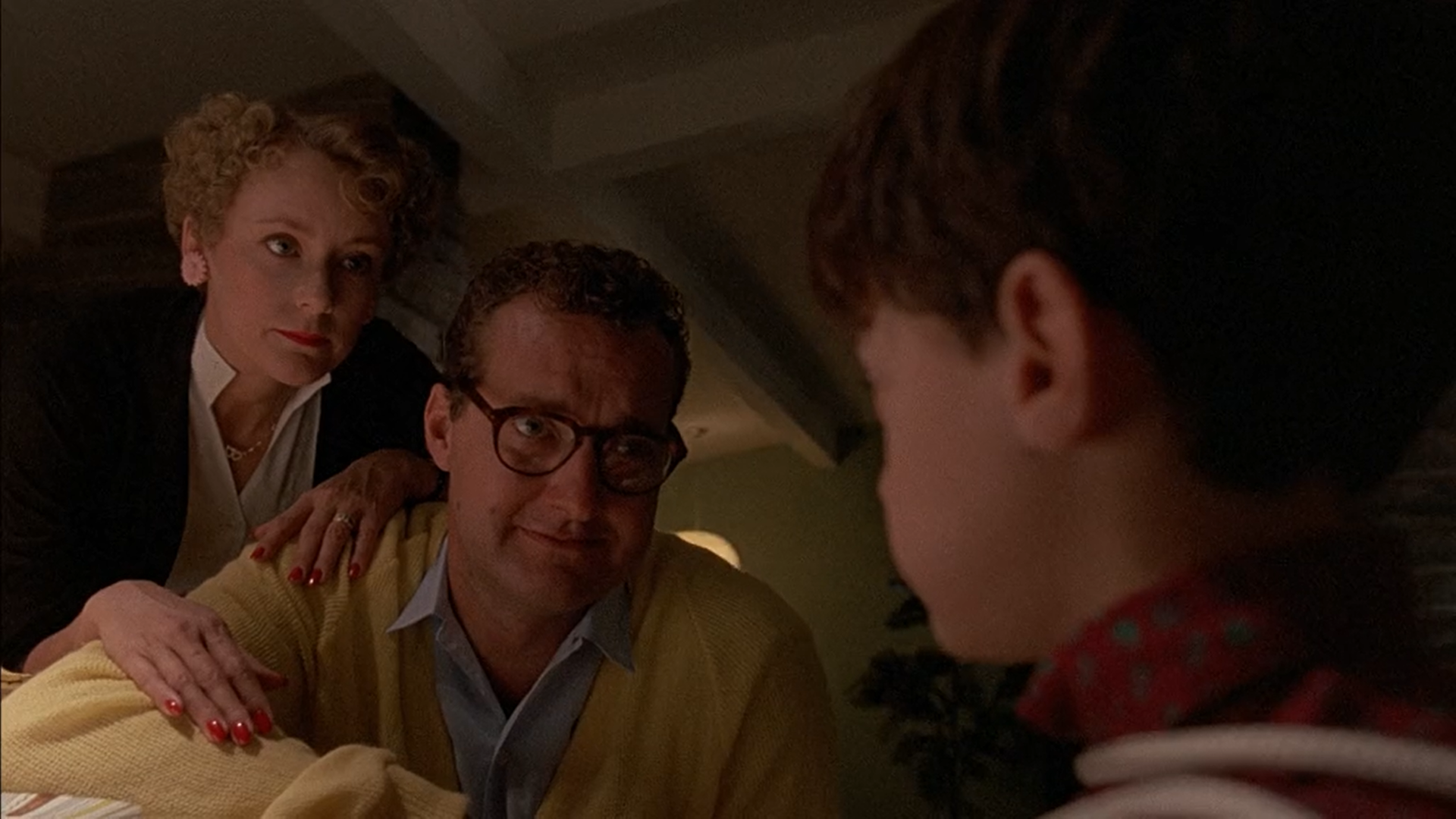
In a hopeful turn of events Michael decides to fight back. He attacks his father, and attempts to escape. In the struggle, Mom attacks Dad. She doesn’t want Michael to be hurt. Fighting back against the abuse, and the abuser. Both parents eventually perish as the house explodes. Michael is free! The film end with him now at his grandparents, seemingly happy and being tucked in to bed. His grandmother places a roast beef sandwich on the side table as a midnight snack. The ominous music and camera focusing directly on this is clearly meant to imply the cannibalism (and abuse) is generational.
It’s important to listen to people’s stories, and understand when survivors say something triggers or activates their past trauma. To us, it’s just a sandwich. To Michael…Well it’s a bit more than that. ※
 LORMAGGOT